

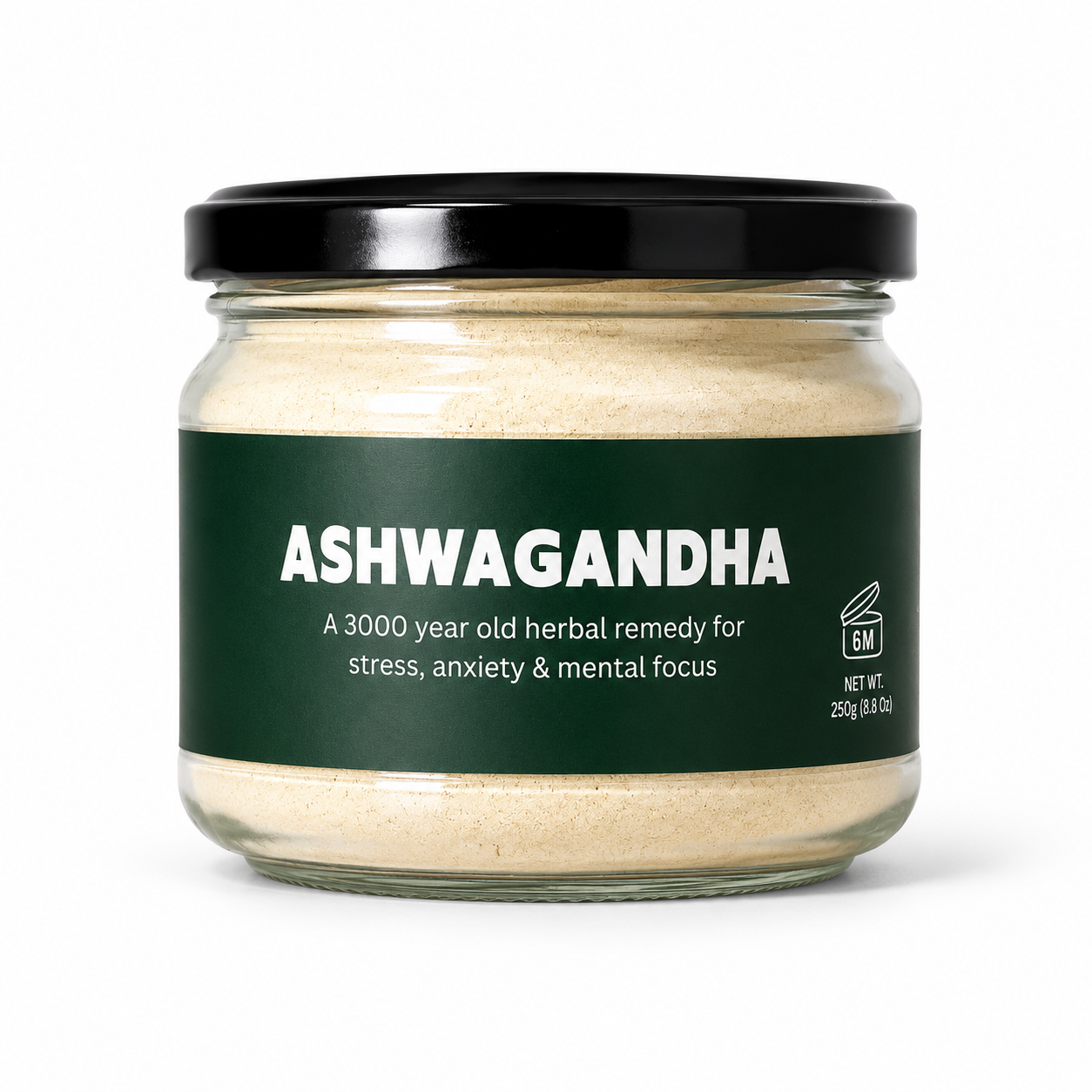
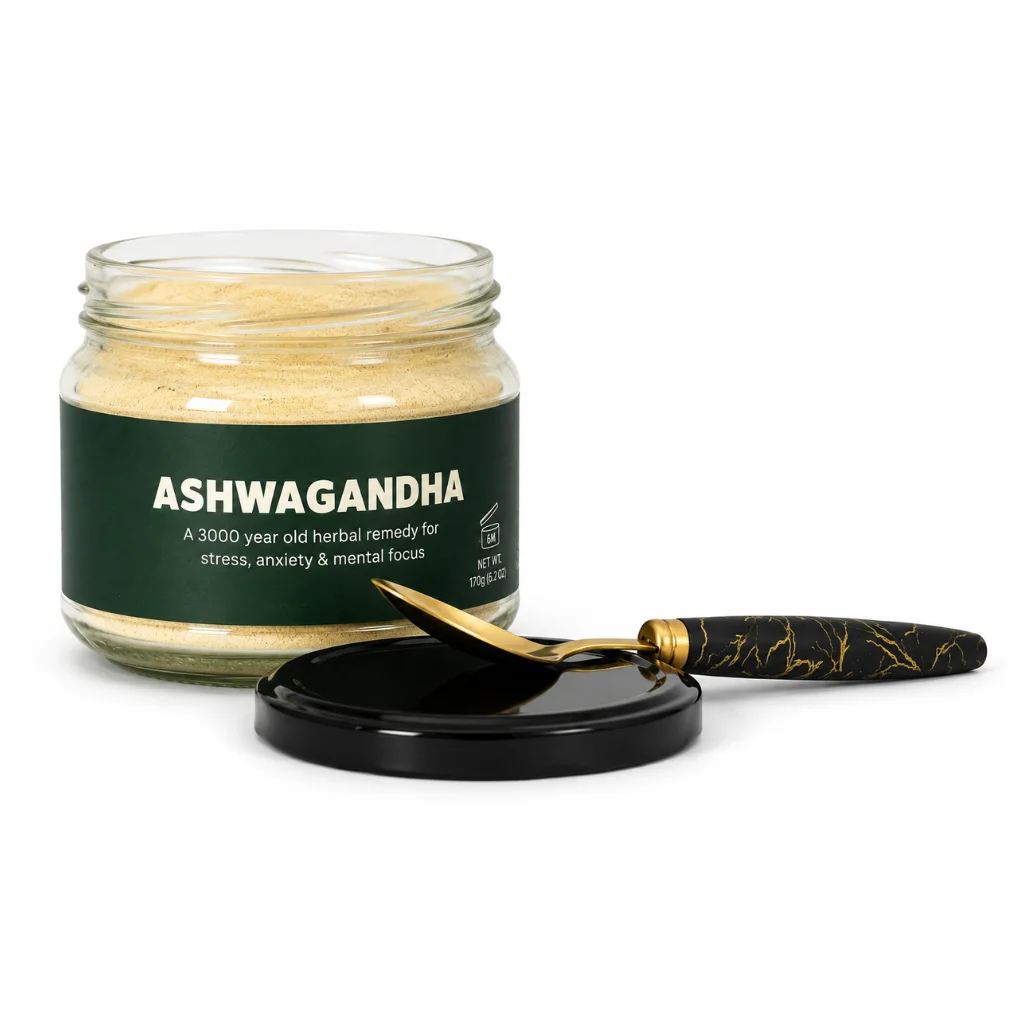
ASHWAGANDHA
Organic Root Powder · Stress & Focus
Ashwagandha
A 3,000-year-old adaptogenic root, used for generations to help the body handle stress and stay clear-headed — taken exactly the way our family always has, minus none of the root and none of the fuss.
What's in 5g of this?
Ashwagandha (Withania somnifera) is a root traditionally classified as an adaptogen. We don't standardize or isolate any single compound from it — you're getting the whole root, the way it's always been prepared.
Why do people take it
Traditionally used to help the body manage the ordinary pressure of a demanding day, not as a quick fix but as a steady daily habit.
Many people take it to feel less foggy and more level-headed through the day, especially during busier stretches.
Often taken in the evening, as part of settling down rather than as a sleep aid on its own.
Less about a single effect and more about how the body handles day-to-day life when taken consistently.
Tradition and research
the tradition
Ashwagandha has been part of Ayurvedic practice for thousands of years, long before it had a category or a hashtag. It was simply something families kept in the house — the way ours has, quietly, for generations.
the research
In recent decades, ashwagandha has become one of the more widely studied adaptogens, with a growing body of modern research looking into how it interacts with stress and everyday wellbeing. We're not scientists, and we won't overstate what that research shows — but it's part of why an old family habit has held up under a modern lens.
Your ritual
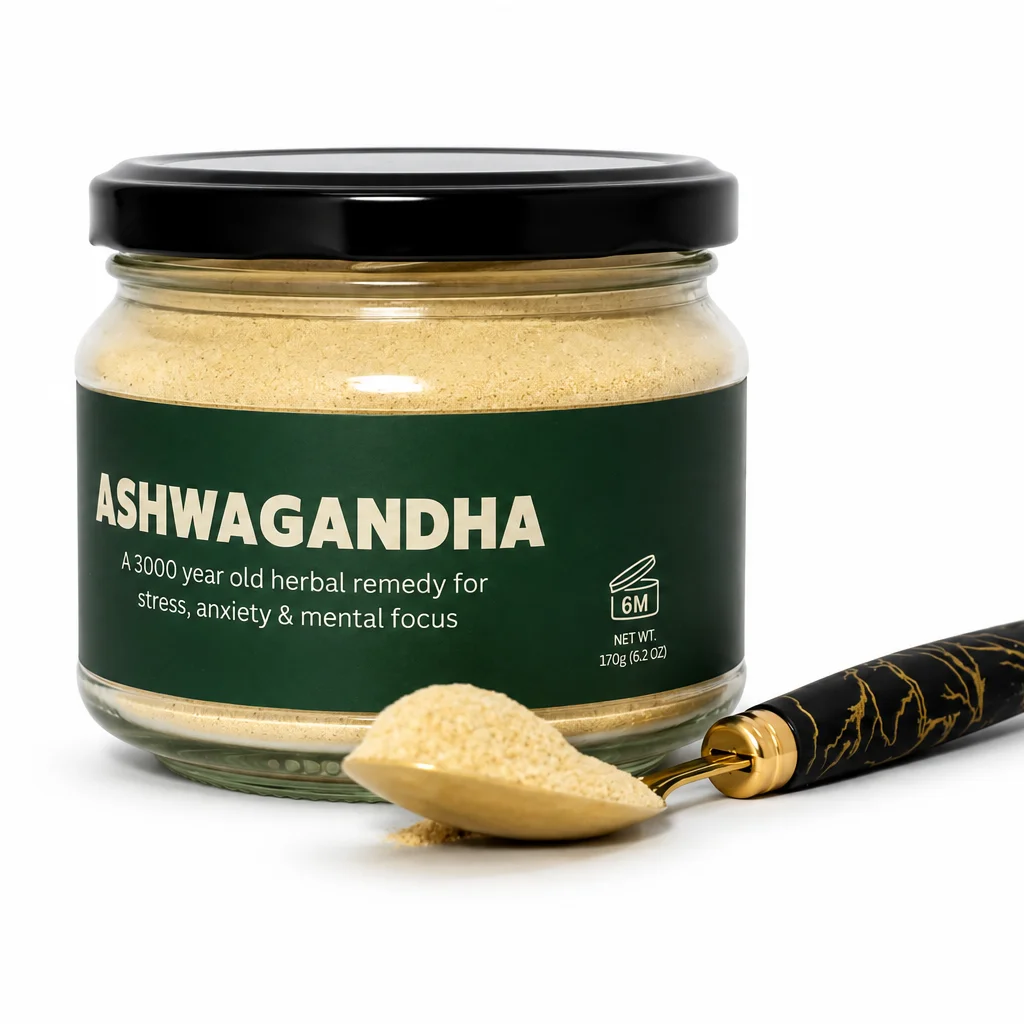
Take roughly 5g (about a teaspoon), stirred into warm milk or water.
Most people take it once daily, often in the evening as part of winding down.
Give it time — this is a habit that builds, not a one-time fix.
Store the jar somewhere cool and dry, lid tightly closed.
Before you take it
This product is not intended to diagnose, treat, cure, or prevent any condition, and it isn't a substitute for medical advice.
If you're pregnant, nursing, on medication, managing a health condition, or unsure whether this is right for you, please speak with a doctor before adding it to your routine.
Keep out of reach of children.